Gabriela Zambrano Dávila
Implementing and Validating Physically Based Rendering Techniques in an Extensible Renderer
Summary
This project implements and validates a physically based rendering pipeline using custom Mitsuba 3 plugins. The system includes a path tracer, a Disney-style Principled material model, HDR environment lighting and a physical thin-lens camera, supported by auxiliary image outputs AOVs, firefly control and optional Intel Open Image Denoise processing. Mitsuba provides the underlying scene, geometry and intersection infrastructure, while Dr.Jit allows the custom Python components to run through vectorised execution.
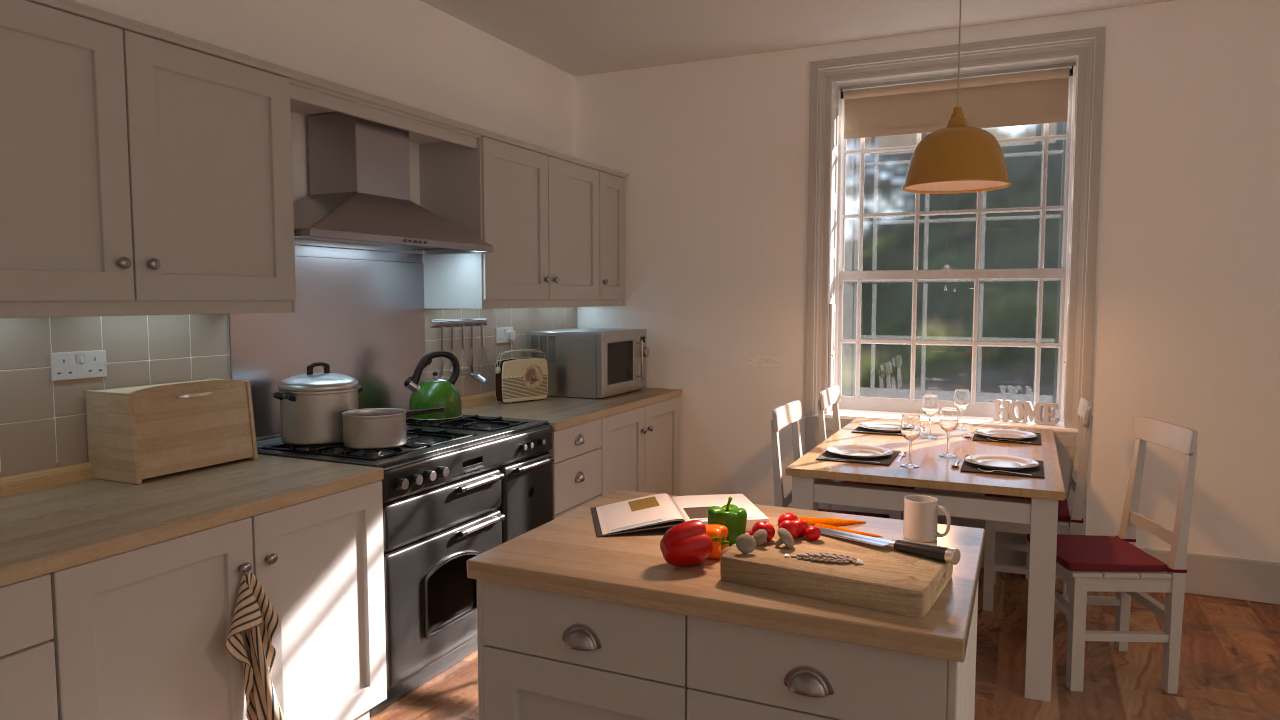 Figure 1. Kitchen Final Result
Validation progresses from mathematical, reference and statistical tests to isolated feature scenes, a Blender-authored LEGO model and the production-scale Country Kitchen interior. The results support the correctness of the main rendering components and show that importance sampling, multiple importance sampling and stratification can reduce noise when appropriately applied.
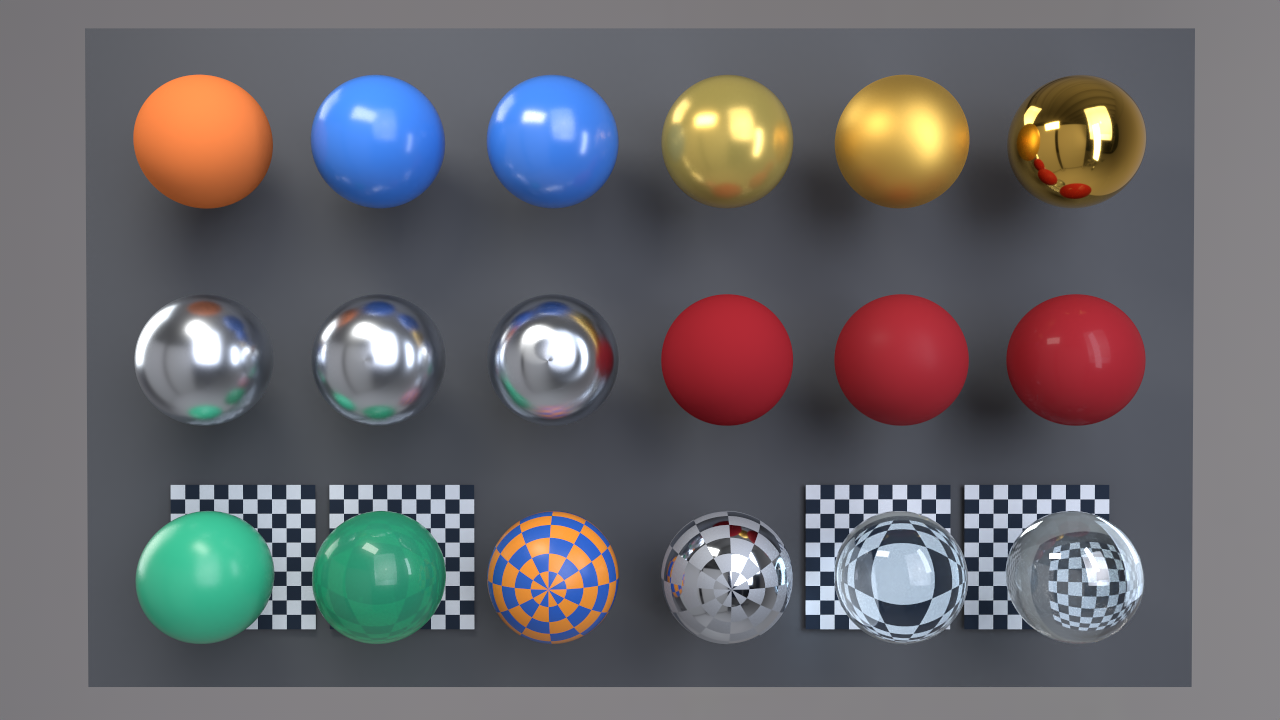 Figure 2. Material Capability
The final stage compared the complete pipeline with Blender Cycles using closely matched geometry, cameras, lighting, sample counts and material parameters. The custom renderer reproduced the main material responses, HDR illumination, depth of field and overall appearance of both controlled and production-style scenes. This demonstrates that the individual plugins work coherently as a complete rendering system and can produce credible results beyond isolated tests. Remaining differences were local and traceable to different material models, glass transport, filtering, scene conversion and documented approximations.
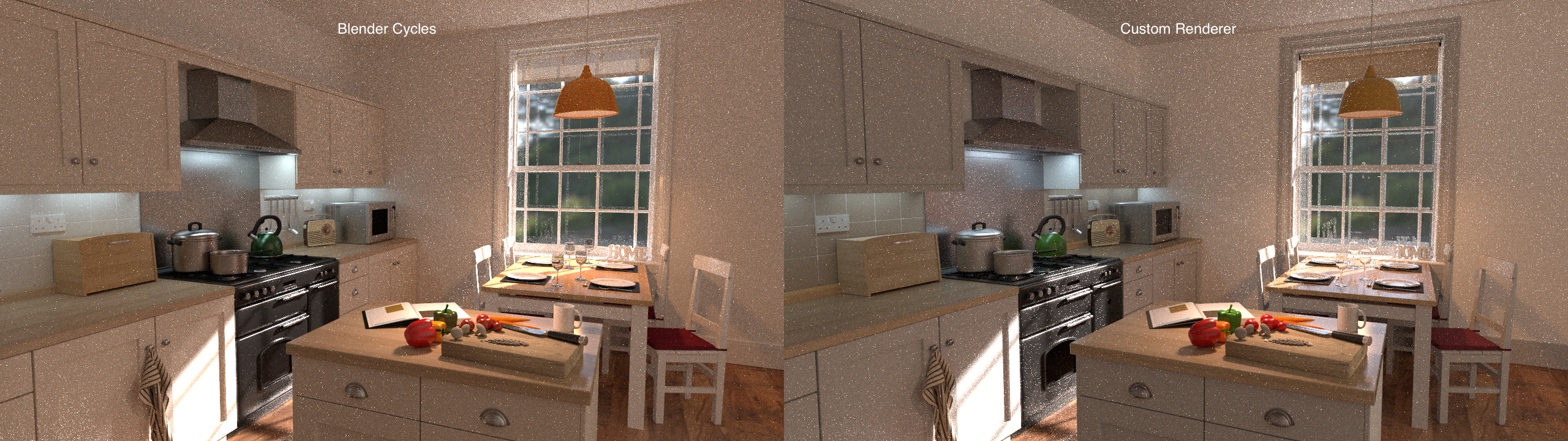 Figure 3. Cycles Raw Comparison
Links
Review the repo:
Source code and documentation
See results and analysis:
Read the thesis
Short on time?
10 minute walkthrough